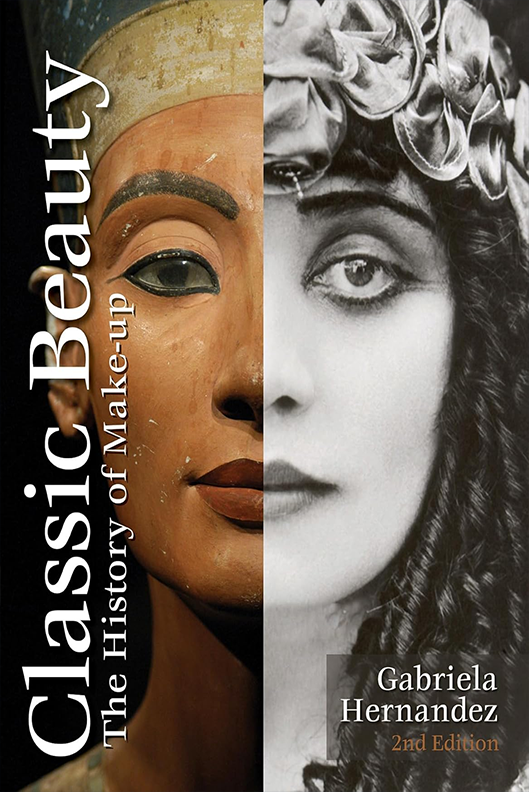

Author
This book examines the development of cosmetics and their effects on esthetics, conventions of behavior and beliefs, and self-definitions in history. Starting from Egypt, makeup was applied both for functional and ornamental purposes: during the life of Cleopatra the eyeliner and kohl were helping to protect the eyes from the scorching sun and defend the face against evil spirits. Cosmetics played an important role in ceremonial complex and clothing indicated one’s social belonging and over weeks.
There is progression in history through the classical and medieval periods in which makeup had been a sign of status, and is mostly worn by women of higher class. During the renaissance, rouge and pale cheek even continued to represent the standard of beauty since the 16 th century, makeup in the 18 th century also became excessive sign of wealthy, especially in French court. In the Victorian period, beauty returned to the modest and porcelain skin was considered a sign of wealth since people did not go outside to perform laborious work.
They say the Industrial Revolution facilitated the manufacturing of makeup products, such as lipsticks and powders for example. Beauty products particularly makeup became a part and parcel of women’s life in 20th century powered by Elizabeth Arden and Coco Chanel. Hollywood played its part in what types of beauty became more widespread, and beauty trends, whether natural or extreme, emerged, to disrupt the status quo.
Over centuries, cosmetics’ major purpose has shifted from being a part of a conceptual domain to a physical necessity that is implemented into the modern society with different aesthetic standards. It has previously served as a fabric of personality, status, and ethnicity, and has evolved as the culture of the society in each period. Since the period of the great civilization, makeup act as an essential part of the lives of people and define beauty standards.